
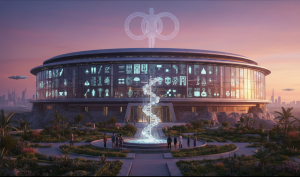
Human Heritage Museum
Philosophical Foundation:
„No One is Forgotten on the Scale of Eternity“
The Human Heritage Museum, conceived by Kris Kristi, is built upon a profound humanistic idea: every human life possesses unique value and deserves to be captured in history. This stands in contrast to the traditional approach, where historical memory is reserved only for prominent figures and celebrities, while billions of ordinary people remain nameless and forgotten.
The museum’s mission is the democratization of historical memory — the recognition that a teacher in a small town, a doctor in a remote village, a factory worker, an artist unrecognized in their lifetime, and every other individual are all integral parts of human civilization. Their stories, experiences, creativity, and daily lives form the authentic fabric of human history. This is a museum not just about those „who changed the world,“ but about „what the world consists of.“ It is designed to be the physical and digital embodiment of the collective memory of the species Homo sapiens, where every person is granted the sacred right to „historical immortality.“
Structure and Organization
The Main Building: The Pantheon of World Heritage
The central museum is a pantheon of human achievement, gathering materials on individuals who have made the most significant contributions to the progress of civilization. The fundamental difference from traditional museums is that the criterion for selection here is not fame or glory, but real impact on human progress. This means that alongside recognized geniuses of science, art, and politics, there may be exhibits dedicated to:
- Unsung inventors whose discoveries changed the world but went unnoticed.
- Teachers who raised generations of outstanding individuals.
- Healthcare professionals who saved thousands of lives.
- Social activists who have improved society.
- Parents of children who changed the world.
- Artisans, craftspeople, artists, and writers who preserved the cultural heritage of humanity.
National and Regional Branches: Democracy of Memory
Each national and regional branch functions as a local archive for national heroes and ordinary human destinies. These branches store information on everyone who has ever lived in that country or region — from major cities to small settlements. Anyone can visit to find not only information about famous compatriots but also documents, photos, and records of their own deceased relatives or any other person. The regional structure serves several purposes:
- Establishing local centers of remembrance
- Ensuring physical accessibility.
- Preserving the link between geography and history.
- Supporting research into family and community roots.
- Forming a cultural bridge between generations.
Thematic Zoning
Exhibitions at the Human Heritage Museum are organized into distinct thematic zones, ensuring a seamless and logical journey through human history:
- Hall of Science (Great discoveries and scientists)
- Hall of Cinema (The evolution of motion pictures through its leading figures)
- Hall of Art (Masterpieces of visual expression)
- Hall of Literature (The legacy of the world’s greatest writers and thinkers)
- Other exhibition areas
The museum does more than just preserve artifacts; it creates a map of global heritage, guiding people back to the origins of legendary lives.
Information Storage System
Digital Database
A digital profile is created for every person, which may include:
- Biographical data: Dates of birth and death, places of residence, education, profession.
- Media: Photos, video recordings, and audio recordings of their voice.
- Documents: Diplomas, letters, diaries.
- Testimonies from contemporaries.
- Genealogical information.
- Digital footprint: Social media, blogs, and creative works.
Material Artifacts
For prominent individuals, outstanding personalities, and those who wish to make a substantial contribution to the museum’s creation, physical items are preserved:
- Personal belongings of historical or emotional value.
- Original creative works: Paintings, manuscripts, intricate handicrafts and inventions.
- Professional tools.
- Family heirlooms.
- Memorabilia and commemorative items associated with significant life events.
Unified Database
All museums are linked into a single global network with a shared database, creating unprecedented opportunities:
- For Genealogy: Descendants can trace their family history across generations and continents, locate specific branches holding materials on their ancestors, and plan visits.
- For Historical Research: Scholars gain access to a massive dataset regarding the real lives of people from different eras, social classes, and regions, allowing for a more complete and accurate picture of history.
- For Education: Teachers and students can study history not just through the lens of „great events,“ but through the stories of ordinary people, making the past more tangible and relatable.
- For Cultural Diversity: The database records languages, traditions, customs, and beliefs through the stories of specific individuals.
Social and Cultural Significance
- Overcoming Oblivion: The museum counters the natural process of forgetting, where memory of ancestors often fades after 2–3 generations. It makes death not an end, but a transition into human history.
- Redefining the Value of Life: Knowing that one’s life will be preserved for future generations can change how people view their existence, helping them realize the value of their own life and their responsibility toward the future.
- Strengthening Generational Bonds: The ability to „meet“ ancestors — to see their photos, learn their stories, and read their letters — creates an emotional connection across centuries.
- Equality in Memory: The museum upholds the principle of equality before history — regardless of social status, wealth, or fame, every life is worth preserving.
- Giving a Voice to the Unheard: The museum rectifies the injustice where most people left nothing but entries in parish and civil registers. It provides an opportunity for migrants, people without families, survivors of wars and disasters, and all others whose stories have been lost or who have never been heard, to finally find their place in the history of humanity.
- Educational Mission: Schoolchildren, students, and researchers will be able to study the history of the region through the lives of its residents, cultural changes through personal stories, migrations, crafts, traditions, the evolution of professions, and social processes. This makes history alive, relatable, and human.
The Global Nexus of the World’s Memory
Today, the legacies of humanity’s most distinguished figures are scattered across the globe, making it immensely difficult to explore their achievements or form a cohesive understanding of their lives and contributions. The Human Heritage Museum addresses this challenge by uniting these fragmented chapters of history within a single space, allowing visitors to connect with the legacies of numerous icons simultaneously.
Synergy with Memorial Museums
Kris Kristi’s project does not seek to replace the memorial house museums of significant figures; rather, it serves as a vital complement to them. It operates on a principle of mutually beneficial cooperation:
- If a primary collection (a house museum) contributes an artifact to the Human Heritage Museum, it gains global exposure.
- Alongside the exhibit, the Kristi Museum’s information display not only presents the object itself but also actively promotes the original site from which it was loaned.
This significantly increases the likelihood that visitors, inspired by what they see, will later visit the original memorial home. This approach restores the names of great figures to the public consciousness and serves as an excellent navigator for cultural tourism.
Funding
- State Support: Recognized as a cultural project of national and global importance.
- Private Donations: The Role of the Sponsor as Co-Creator: The uniqueness lies in the fact that supporting the Museum is more than just charity — it is an act of personal participation in history. Sponsors and partners do not merely fund a building; they write their names into the very archive they help to create, taking a place of honor among the heroes of humanity.
- Service Fees: Nominal fees for specialized services (e.g., production of documentary films, digitizing biographies, genealogical research, or creating expanded exhibits).
Long-term Vision
The Human Heritage Museum is a project for eternity. Its goal is to create humanity’s own living, ever-growing memory of itself. Hundreds of years from now, people will be able to trace the path of their species and understand how their ancestors lived, what they dreamed of, and what they created. It is not merely a data repository, but a space for dialogue between generations — a place where the past remains alive and significant, and future generations find their roots and identity through those who came before them. People of the future will be able to admire the heritage of humanity’s best representatives, while every individual gains the sacred right: to never be forgotten by grateful descendants.